
If you want to talk to Oprah, bring her your intentions, not your ideas
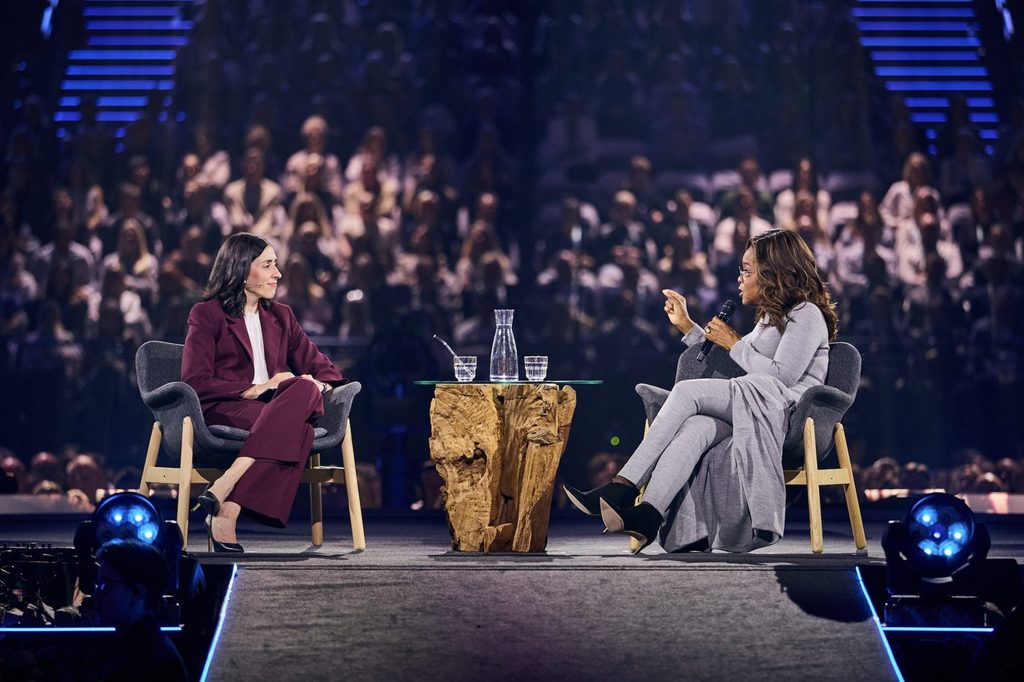
For the world’s most admired interviewer, it’s your “why” that matters
In 1989, Oprah Winfrey read Gary Zukav’s “The Seat of the Soul” and came away convinced of the power of intention. It’s not simply what we want or desire, and it’s not just our goal or plan; it’s our intention, the emotional “why” of our actions, and it determines their outcome.
The first time she put this power into practice, she walked into the green room to meet a mother whose teenage daughter had been killed by her boyfriend. Normally Oprah avoided the green room but this time she asked her guest why she’d come. “Because your producers asked me to,” the woman said. Oprah pushed back: What was the woman’s intention? Everywhere she went, the woman said, people only wanted to talk about the murder. But her daughter had a life, and she wanted to talk about that.
Oprah told the woman she could do that, and she shared her own intention in return: Not to be a voyeur, but to explore the daughter’s life so that every family watching would see their own daughter in it. The interview was deeply affecting, the show won Oprah her first Emmy, and she is now, of course, one of the most celebrated, influential, and beloved interviewers in the world.
Last month, on stage in front of 8,500 people at the Nordic Business Forum in Helsinki, I spent 80 of the most enthralling minutes of my professional life in conversation with Oprah. I posted about it at the time, but I am still pinching myself, not only for having had the chance to do it, but for the experience to have been beyond even my wildest expectations (which were already very high!). When I asked her what had sustained 25 years at number one, she went straight back to that 1989 green room. It wasn’t about talent or ratings, it was about intention.
After that crucial interview, Oprah and her team changed how they did things: met before every show, to check on what she intended to say, and what they intended for her to say, and what they expected from the guest, and to make sure they were all in sync. Those conversations started two weeks out from the show, they happened again the night before, and then again after, when they asked: Did we do what we said we wanted to do? If not, what changes for the next one?
Oprah still runs all her projects in the same way. She is currently working with a team of world-class artists, producers, and creators to build an immersive show called “AHA” (as in “Aha!” moments of realisation and discovery) for the Sphere in Las Vegas. She told me that her first move was to tell her very impressive colleagues to check their egos at the door. She said the most important thing was the intention she wanted everyone to share: a boundary-pushing, connection-focused experience for the audience.

It made me reflect on how often I see leaders and their teams orient themselves toward information, not intention. Ahead of a tough conversation or a big change announcement, we so often check the data and confirm the facts but rarely do we stop to check on our ‘why’ or to level-set with others around the intention that they are bringing to the conversation.
That matters because, beyond our intentions for a specific conversation, there is, according to Oprah, a common intention we can all help our conversation partners fulfill. Across her 35,000 interviews – with guests ranging from a man serving a life sentence to Beyoncé and Barack Obama – Oprah noticed that almost everyone asked her some version of this question: “How did I do?…” Was that okay? Underneath, she says, is the question every human being is asking: Do you see me? Do you hear me? Does what I say matter?
And part-way through our conversation, she turned the tables on me. She asked me how co-chairing the G20 Youth Summit in 2014 had led me to the stage we were now sharing. Then she paused, and listened intently. Those of you who’ve been reading me for a while, know how much I enjoy the challenge of rolling with surprises, but I wasn’t expecting this at all. And I am still reflecting on her generosity in asking the question and in how she listened to my answer. I felt seen. I felt heard. I felt like what I said mattered.
I’ve taken the note, of course! I’ve long asked clients what they want their people to think, feel and do, but in the weeks since our interview I’ve started asking myself, too, in the everyday moments I’d never think to prepare for.
Twice, it stopped me from firing back at an exasperating email. I realized I wanted to keep the relationship, not win the point. And through 55 hours of extraordinary travel delays for a single leg of a recent trip, it reminded me that my intention was what my two-year-old would learn from watching me. The delays were no shorter, but I did my best to meet them with grace and good humour instead of frustration.
Enjoyed reading this? Share the love!