
What the Artemis II astronauts did before they ever left Earth
You can’t rehearse the moment itself. But you can rehearse being ready for it.

Watch the conversation on YouTube
Catherine Hansen chose where she would sit for the longest six minutes of her life.
In April, the four astronauts of Artemis II became the first humans to travel around the Moon in more than 50 years. As their capsule plunged back through Earth’s atmosphere and radio contact dropped out, Catherine was in Mission Control, holding tight to Canadian astronaut Jenni Gibbons on one side and her son on the other. She knew families aren’t always told everything straight away, and from there she could watch the floor. Then Reid Wiseman’s voice came over the loop, and she breathed, she told me, for the first time in six minutes.
Before launch, she and her husband, Jeremy, the first Canadian to fly to the Moon, had sat their children down and told them the truth: Dad might not come home. “You can’t prepare ever,” she told me, “but we did all the things that you can.”
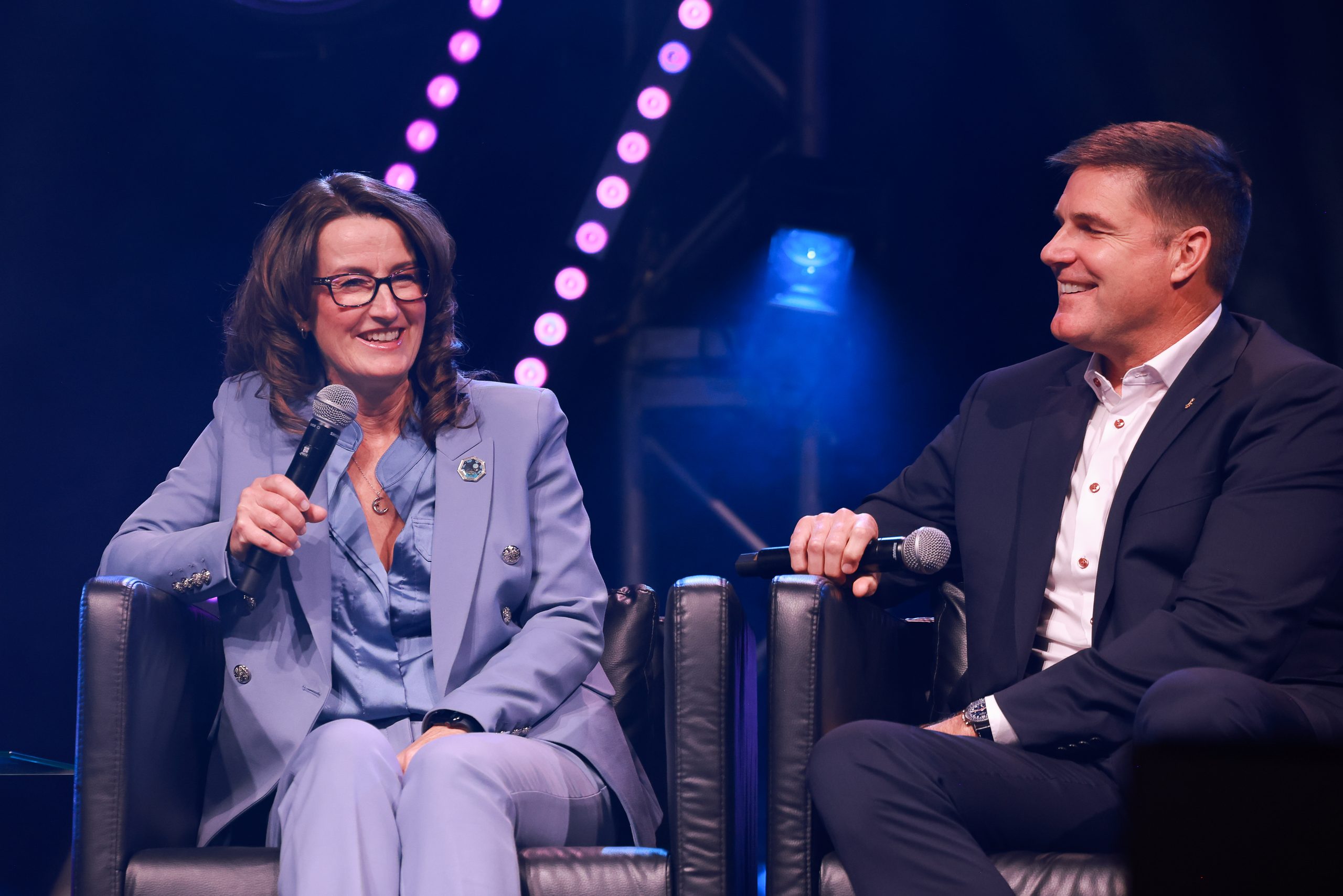
I interviewed Jeremy and Catherine on stage in Calgary at Energy Disruptors, and that line has stayed with me. It holds the paradox at the heart of preparation. Nobody hands you the script for the moment that matters most. The work is becoming someone who doesn’t need one.
Astronauts train for exactly that, and not only in simulators. Jeremy told me crews go looking for experiences that are “new and somewhat ill-defined,” with “no textbook answer,” because that is how you build the confidence to adapt in the moment. On one expedition to study craters in the Canadian Arctic, a small plane dropped the crew on open tundra, due back in ten days if the weather held. Then the fog rolled in, leaving them days from any medical help.
Nobody hands you the script for the moment that matters most. The work is becoming someone who doesn’t need one.
The same thinking shaped the crew. Video streamed from inside the capsule almost around the clock, and the world fell for what it saw: four people who clearly liked, trusted and looked out for one another. An all-star team. On stage, Jeremy corrected the picture. “We’re not these magic four,” he said. “We are not four people who naturally just fit together like that.”
A few months into training, they could tell they were getting the job done but weren’t yet great. So they asked for half a day a month to work through their tensions, and brought in the psychologists with a brief: “We’re an okay team. We want to be a great team. Help us.” When a geology field trip took them to Iceland, they tacked on two days of backpacking with an instructor from the National Outdoor Leadership School, and used the discomfort to draw their tensions out on purpose, with a coach to help them work through it. They came home understanding each other’s pain points, and how each of them affected the others.
It showed when it mattered. After splashdown, on the flight back to Houston, Jeremy told his crewmates he couldn’t think of a single moment on the mission when grace wasn’t offered.
In my work with leadership teams, I see the opposite instinct all the time. We rehearse the content and assume the cohesion. We wait for the high-stakes moment to find out how we behave under strain.
You never outgrow or outrun discomfort. It just changes shape.
Three weeks ago, my wife Kate, my Energy Disruptors co-founders Graeme and Michelle Edge, and I started a Year of Fear. Every day, each of us does something deliberately uncomfortable. I did my first in 2015, and it remains the most transformative thing I’ve done, personally or professionally. That year I left the corporate world to start my own business, raced my first Ironman, and confronted the mindsets that had been holding me back, vulnerability chief among them.
Last week, I asked a master of my craft, who can be an intimidating coach, for honest feedback on a presentation. I made myself speak Spanish out loud again after letting it slide for years (for someone who speaks for a living, stumbling through a conversation is its own special kind of uncomfortable). And I signed up for a hip hop class.
None of it is heroic. That’s the point. These are my small stretches of tundra. You never outgrow or outrun discomfort. It just changes shape. The only way I know to meet it well is to keep meeting it on purpose.
Because the test always comes. On Artemis II, the crew was woken by a false alarm every night but one. As Jeremy reminded me, though, a false alarm has all the markings of a real alarm until you figure out it’s false. The scariest came while they were still circling Earth, about 15 minutes before the engine burn that would send them to the Moon. A warning flashed: cabin leak suspected. “No air, no life.” For a few minutes, until they traced it to oversensitive sensors, Jeremy was weighing two futures. Fire the engines and head for the Moon, or abandon it, get into spacesuits, and spend the next 24 hours looping back toward home. They worked the problem the way they’d practiced, calmly and together.
“We need to expect the tests,” he told the room. “It’s crazy to not expect that.”
You can’t prepare for everything. But you can do all the things you can.
Enjoyed reading this? Share the love!