7 Nuggets From 7 Conversations in 2025

Olympic champions. Human rights lawyers. Circus executives. Podcast hosts. Bestselling authors. Former Secretaries of State.
This year has brought me face-to-face with some of the most brilliant, unexpected minds across industries, disciplines, and continents—and every conversation has been a gift. And it’s been my privilege to bring them to you, whether through Love Mondays on LinkedIn or my monthly newsletter, Conversations That Matter.
As we close out 2025, I wanted to bring together the insights that hit hardest—the ones I still find myself circling back to long after the conversation ends. The ones that shifted how I lead, think, and show up.
If you’ve been following along all year, consider this your highlight reel—your handy refresher for end-of-year reflection. If you’re newer here, welcome to the best bits, you should hang around for the ride in 2026.
Here are seven nuggets that changed my perspective in 2025—and that I hope will spark something for you as we head into the New Year.
Nugget 1: Show Up. Do the Work. Let the Outcome Follow.
From Olympic Gymnast – Simone Biles
Earlier this year, I had the privilege (read: pinch-me moment) of sitting down with the one and only Simone Biles at ATD in Washington DC.
Now, Simone needs no introduction… but I’m giving her one anyway: 11 Olympic medals (seven gold), 30 World Championship medals, five skills named after her—some of them so death-defying, most gymnasts wouldn’t dare attempt them. Her name isn’t just etched into the sport of gymnastics—it redefined it.
But here’s what surprised me: Simone never set out to win gold.
“My goal was to be better than I was at my last competition—and to show up better than my best self yesterday. And so, at the end of the day, if I was doing that, then the outcome usually looked pretty good.”
She wasn’t aiming for medals. She was aiming for progress—on her own terms.
And when you do that consistently? The results usually follow.

Nugget 2: Spectacle Doesn’t Matter If the Basics Are Broken
From Cirque du Soleil’s Chief Show Officer – Duncan Fisher
Think “circus,” and your brain probably jumps to chaos—juggling acts, fire breathers, a little mayhem under the big top.
But when I sat down with Duncan Fisher, Chief Show Officer at Cirque du Soleil, at IMEX America in Vegas this year, he set the record straight.
“It runs like clockwork. Because it has to.”
And he wasn’t kidding. Duncan oversees one of the most complex live operations on the planet:
- 8,000+ shows a year
- Across six continents
- Reaching 10 million audience members
- With 4,000 staff, speaking 36 languages, from 80+ nationalities
And every night, performers launch themselves 40 feet into the air — trusting someone will catch them.That’s not chaos—that’s trust, precision, planning, and deep alignment.
But what really stayed with me wasn’t just the jaw-dropping logistics—it was Duncan’s laser focus on customer experience.
(Which I got to experience firsthand when I joined Duncan at Michael Jackson ONE in Vegas and got a meet and greet with the cast backstage.)

At Cirque, that experience doesn’t begin when the lights dim. It starts in the car park and ends when guests are back in their car, still smiling, still talking about it.
“You can spend millions on sets, digital screens, fancy apps,” Duncan told me,“But if the toilets are dirty, none of that matters.”
That line hit me. Because so often, businesses chase the next big thing—the wow-factor, the flashy tech—without fixing the friction that’s right under their nose…the queues, the lack of signage, the car park confusion, the broken soap dispenser.
So, where might the basics be letting your brand down?
Nugget 3: Fail More. Learn Faster. Win Bigger.
From Entrepreneur and Diary of a CEO Podcast Host – Steven Bartlett
Steven Bartlett — entrepreneur, bestselling author, and host of The Diary of a CEO, one of the world’s most-watched business podcasts — knows what it takes to lead in a world that won’t slow down.
In our conversation for Growth Faculty, he pointed to a striking prediction from futurist Ray Kurzweil, author of The Singularity Is Near:
We’re on track to experience 20,000 years of progress in this century alone.
Yes, twenty thousand. So if you’re 40 today, by the time you’re 60, you’ll experience a year’s worth of today’s change roughly every 90 days. That’s a year’s worth of transformation — technology, customer behaviour, geopolitics, business models — every quarter.
Faster than most leadership teams can plan, decide, or respond.
So how do you keep up? For Steven it’s increasing the rate of failure.
“If you want to double your success rate, you have to double your rate of failure.”
But Steven isn’t just pro-failure — he’s pro smart failure. He has systems that make sure his teams take thoughtful risks, learn quickly, and move forward with better insight, not chaos.
He has a dedicated Failure & Experimentation team whose job is to increase the rate of failure and his teams are rewarded and celebrated for running experiments – regardless of the outcome.
Because in a world that’s changing fast, the real risk isn’t failure — it’s standing still.
Do your systems reward the search for better answers — or the comfort of old ones?

Nugget 4: Not Everyone Thinks Out Loud — And That Matters
From best-selling Author – Susan Cain
When I spoke with Susan Cain, author of Quiet at the ASAE Annual Meeting in Los Angeles, we explored an issue that’s still very real in today’s workplaces: workplaces designed for extroverts can stifle introverts’ best thinking.
She shared a story that brings this to life. Susan was working with a tech startup where the CEO was annoyed that his “star performer”—someone who’d been brilliant in interviews and early projects—had seemingly gone quiet in team meetings.
Then Susan asked the employee one question: “What brings out your best thinking?”
Their answer? “If I could get the agenda 24 hours in advance and have five minutes to collect my thoughts before each topic, I could give you insights that would save this company months of work.”
They tried it. Within a month, this “underperforming” team member identified a critical product flaw that would have cost them $2 million.
What makes this even more compelling is the science behind it. Introverts and extroverts process information differently: Introverts need time and quiet to reach insights, while extroverts often like to think out loud because talking actually helps them process.
As Susan pointed out: “Asking an introvert to brainstorm out loud is like asking someone to write with their non-dominant hand. They can do it, but you’re not getting their best work.”
And introverts make up roughly 30-50% of the global population, so that’s potentially half your team whose best thinking you might be missing.
So try asking your team in the New Year: What brings out your best thinking and contributions?

Nugget 5: Daring Leadership Starts with a Check-In
From Researcher and Author – Brené Brown
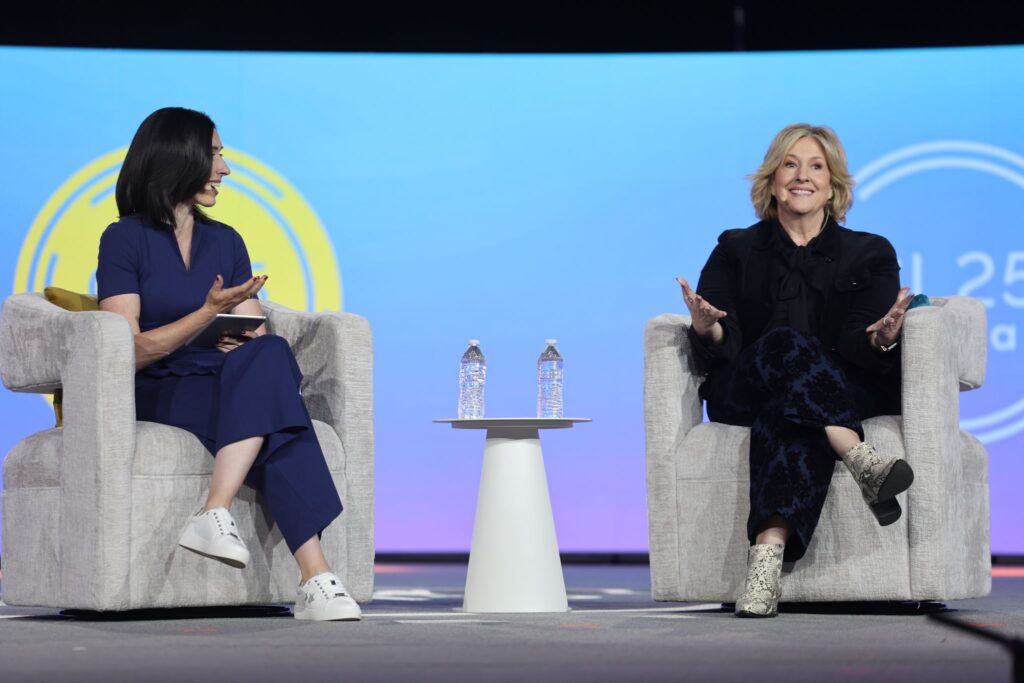
When I sat down with Brené Brown—researcher, bestselling author, and one of the most compelling voices on vulnerability and courage—at PCMA Convening Leaders in Houston, I asked her: What’s one habit leaders can adopt this year to embody daring leadership?
Her answer was: two-word check-ins.
Here’s how it works. Brené starts every team meeting with a quick round where each person shares how they’re feeling in just two words.
It might be “Energised and focused.” “Hopeful and grateful.” “Overwhelmed and drained.” Whatever it is gets named. The leader thanks everyone for their honesty.
And here’s the crucial second step: if someone shares something like “overwhelmed and drained,” Brené makes a point to follow up after the meeting: “What does support from me look like today?” From there, they work together to problem-solve.
Brené’s two-word check-ins force us to confront some hard questions:
- Are you paying attention to the human beings behind the job titles?
- Are you creating space for people to speak their truth—or just pushing for results at any cost?
- Are you brave enough to ask your team what they actually need—and then act on it?
As Brené put it: “It’s not your responsibility to figure out what your team needs—but it is your responsibility to ask.”
What are you doing to check in with your team—not just on their work, but on how they’re really doing?
Nugget 6: The Future of AI Is Up to Us
From International Human Rights Lawyer – Amal Clooney
“The arc of history doesn’t bend toward justice by default—it does so because we make it so.” – Amal Clooney
That line has stayed with me since I spoke with Amal Clooney at PCMA Convening Leaders. It reframes the famous quote from Dr. Martin Luther King Jr., who said: “The arc of the moral universe is long, but it bends toward justice.”
But Clooney adds a crucial reminder: it doesn’t bend on its own.
It’s a powerful lens through which to look at artificial intelligence.
Right now, most conversations about AI sit at extremes—either dystopian fear or shiny efficiency. We’re stuck asking: Will it destroy us? or Will it save us five minutes?
Amal Clooney invites a better question: How can we use AI to improve the world?
She shared how the Clooney Foundation for Justice’s TrialWatch programme uses AI to monitor courtrooms worldwide—tracking trials, uncovering human rights violations, ensuring accountability across countries and languages.
And there’s more examples: AI is helping track endangered wildlife, diagnose diseases earlier, respond to disasters faster, personalise education, reduce carbon emissions, fight human trafficking, assist people with disabilities, optimise farming, provide mental health support, and predict wildfire spread.
The takeaway? AI isn’t good or bad on its own. It becomes what we make of it.

Nugget 7: The Quiet Power of Kindness
From Former Secretary of State – Hillary Clinton
Earlier this year, I sat down with former Secretary of State, Hillary Clinton at The Hatchery’s Women UNLIMITED Leadership Summit—our second conversation together—and once again, I left captivated by her ability to hold both clear-eyed realism and unwavering optimism in the same breath.
Secretary Clinton credited her mother, Dorothy, as her greatest teacher. She shared the story of a first-grade teacher who gave young Dorothy lunch when she had none—a single act of kindness that fundamentally changed her mother’s life.
That experience shaped what Dorothy taught her daughter: the one thing you can do every day is exhibit kindness because small moments of care can shift someone’s entire path forward.
We often underestimate the ripple effect of small acts. A lunch. A word of encouragement. A moment of genuine attention. These aren’t trivial—they’re potentially trajectory-altering.
What small act of kindness could you offer this week that might shift someone’s trajectory?

Seven conversations that shifted how I think about leadership this year. And I’ve got more lined up for 2026 that I can’t wait to share — and Conversations That Matter subscribers will get them first.
Thank you for reading, for showing up, for being part of these conversations. Here’s to 2026.
Holly